
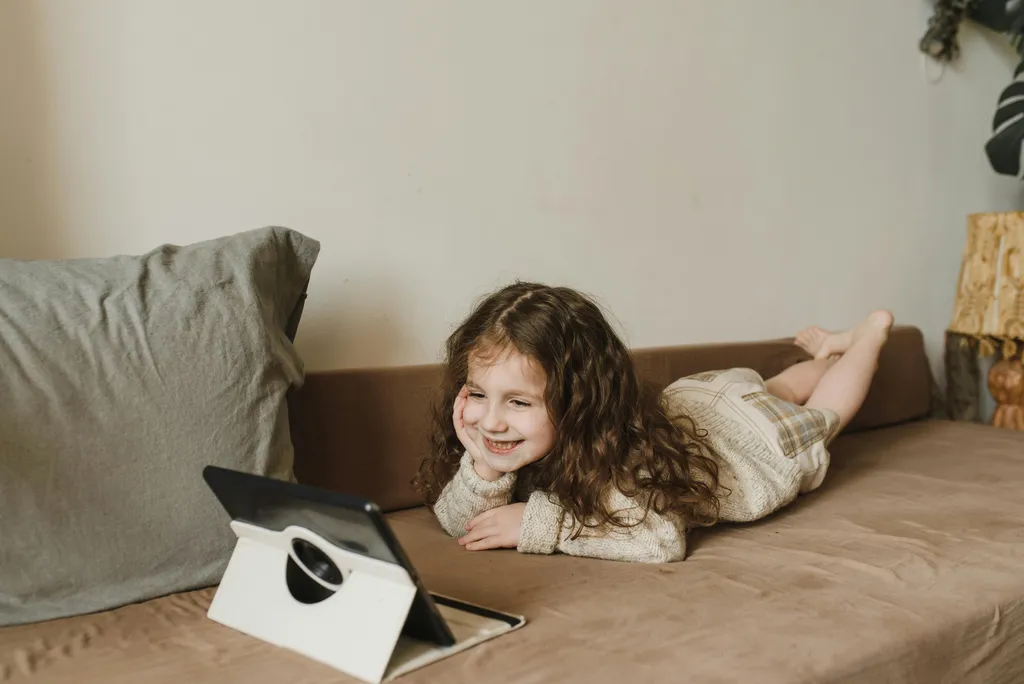
Autoplay sounds harmless: when one video ends, the next one simply starts. For children, that is exactly the critical point. A conscious choice becomes a stream of content that keeps moving without a pause.
Why Autoplay Is So Powerful
Children need natural stopping points. The end of a video should be one of those moments: pause for a second, decide whether to continue, maybe do something else. Autoplay removes exactly that pause.
The next video is not chosen, it is served. And because the thumbnail, title, and sound immediately grab attention, turning it off suddenly feels like an interruption — not like a normal ending.
Autoplay does not only take children's time. It takes away the moment where they could stop by themselves.
How Autoplay Affects Children
No active decision needed anymore
Autoplay takes the decision away from children. The next video just plays — whether wanted or not.
Content gets progressively more extreme
Studies show that autoplay chains tend to lead to increasingly intense or emotionally stimulating content to hold attention.
Sense of time is lost
Without natural pauses, the sense of time blurs. An hour feels like 20 minutes.
Why Turning It Off Is Not Always Enough
Of course, you can disable autoplay in YouTube. That helps, but it does not solve everything. Recommendations, Shorts, and open search remain. For younger children, that is often still too much platform machinery.
A better environment is one where the next video does not start automatically and only content you approved beforehand is visible. Then YouTube becomes a choice again — not an endless loop.
No autoplay. No pull. Just your rules.
Tubsy gives your child YouTube content inside a calmer frame: no automatic next video, no open feed, and boundaries you set.
Try Tubsy for free