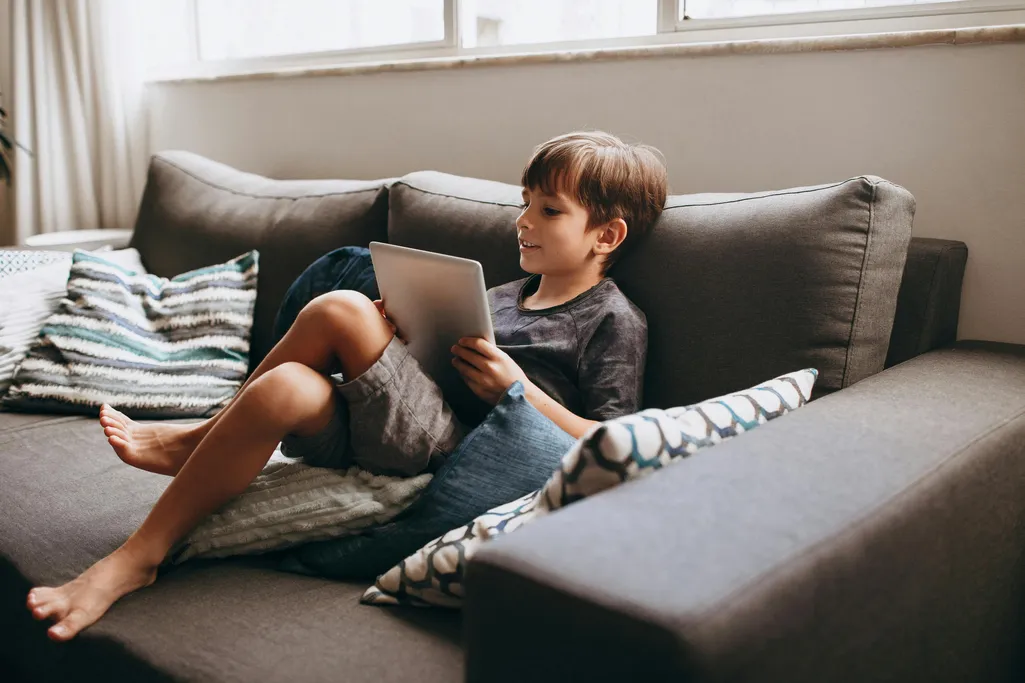

Screen time should not be judged the same way at every age. A toddler needs different boundaries than a primary school child, and a teenager needs different agreements than a preschooler. What matters is not only the number of minutes, but also what is watched, when it is watched, and whether your child can transition back into everyday life afterwards.
Basic principle
The younger the child, the more important short sessions and co-viewing become
For young children, screen time is especially intense. They cannot yet understand content well, lose track of time more easily, and need adults to explain, limit, and help them move back into the real world.
That is why health organizations recommend very little or no screen time for very young children. When media is used, it should be calm, age-appropriate, and ideally watched together.
Everyday life
A good rule fits your family, not just a table
Age ranges give direction, but they do not replace a family rule. A child who is completely overstimulated after 20 minutes of YouTube may need a shorter limit than a table suggests. An older child can take on more responsibility, but still needs clear breaks.
What helps is a simple, visible rule: when screen time happens, how long it lasts, and which content is allowed. The less you renegotiate spontaneously every time, the calmer screen time becomes.
The best screen time rule is not the strictest one. It is the rule your child understands and you can still hold on tired days.
Recommendations
Age-Appropriate Recommendations in Detail
At this age any screen time is problematic for brain development. Exception: video calls with grandparents or other attachment figures.
In practice: no YouTube for calming down or as background noise.If at all, only with parents present and with educationally high-quality content. Not as a babysitter.
Short, calm content is better than fast clips or autoplay.Clearly limited time, watch together where possible. Content should be educational and age-appropriate — and you should know what your child is watching.
For many families, 20 to 30 minutes works better than a full hour at once.As children get older their self-regulation ability grows, but clear rules remain important. Screen time should not displace real-world activities.
Sleep, school, movement, and family time should always come first.Teenagers need more autonomy, but also continued structure. Mutually agreed rules are more effective than one-sided bans.
At this age the focus shifts toward balance, content, sleep, and responsibility.Putting it into practice
What parents should watch besides duration
Fixed time windows
Screen time works better when it is not available at any moment. A fixed window after homework or on weekends removes many arguments.
Approved content
One hour of calm learning videos is different from one hour of autoplay, Shorts, and recommendations. Content and context matter as much as minutes.
No screens shortly before sleep
YouTube in particular can be emotionally activating. A clear gap before bedtime helps children settle down more easily in the evening.